
Who We Are
About Kinetic Seeds
A small firm with a wide view of higher education.
Our Origin Story
We started Kinetic Seeds in 2014 with a question:
What would change look like if it honored relationships as much as results?
At the time, we were working inside institutions that gathered stories, ran listening sessions, and collected community input. But what people shared didn't always shape what happened next. Strategies were written, but too often struggled to take hold in practice.
We knew there had to be another way.
So we created Kinetic Seeds, a practice rooted in listening, shared learning, and designing with the people who would put the work into practice.
Kinetic for the energy of motion, the momentum that drives change.
Seeds for the ideas, relationships, and interventions that take root and grow.
That’s at the heart of our name.
Founder
Meet Our Benevolent Troublemaker
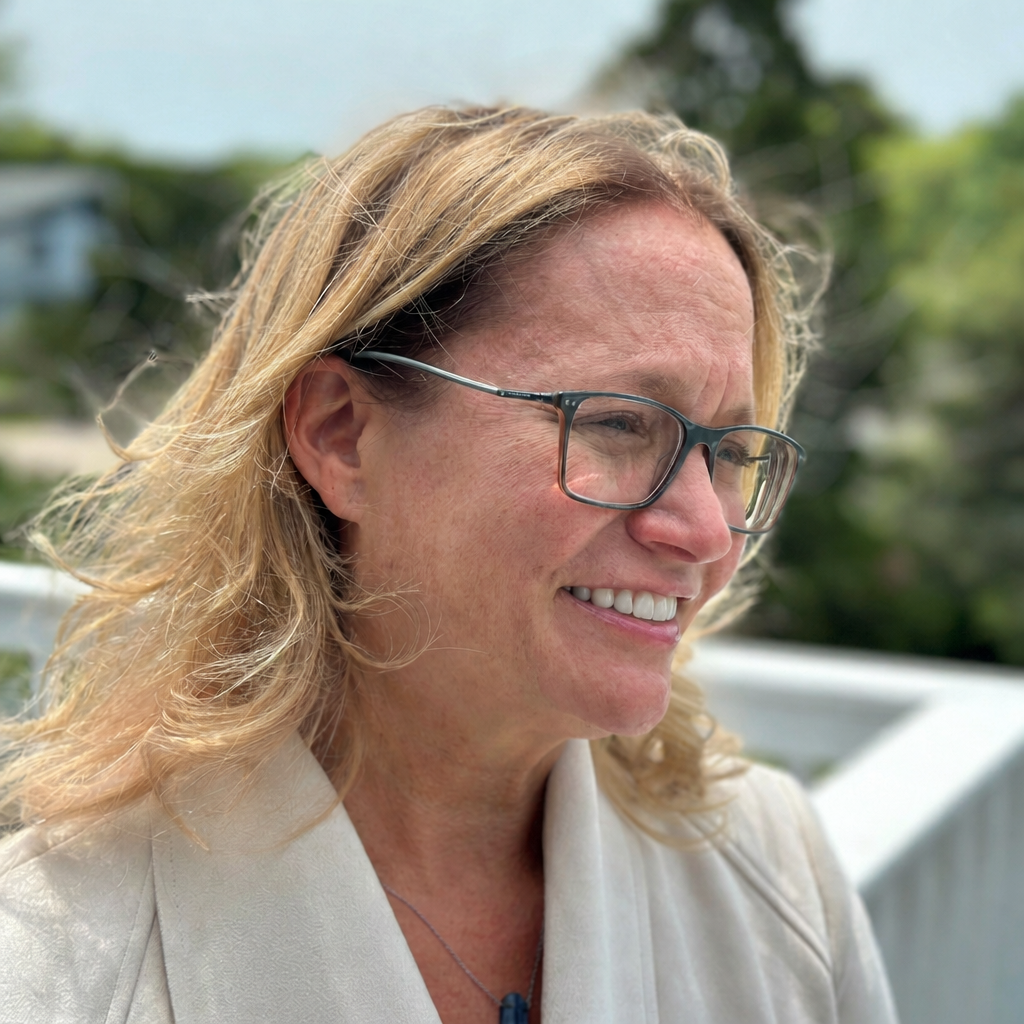
Christine Flanagan
Founder, Kinetic Seedscflanagan@kineticseeds.comLinkedIn
I didn’t set out to become a troublemaker.
For years, I worked in the language of systems change: strategic plans, theories of change, design processes, outcomes, measures, timelines. I believed in that work, and I still do. There’s real value in making complexity visible, setting direction, and knowing whether what we’re doing is actually making a difference.
But over time, I began to notice what those tools couldn’t hold.
A strategy can name a destination without changing the relationships needed to reach it. A listening session can gather people’s wisdom without giving that wisdom any real influence. Even a participatory process can invite people into the room while leaving deeper patterns of power, trust, history, and decision-making largely untouched.
We can map change, measure it, and put it in a spreadsheet, but we can’t spreadsheet our way to becoming different together.
That understanding came slowly, and then somehow all at once.
At a retreat with Braiding Sweetgrass author Robin Wall Kimmerer, I heard an invitation to pause before acting, to listen for what had been forgotten, and to consider what might need to return. Her words gave language to something I’d already begun to feel in the work: that change has rhythms we don’t control, that relationships aren’t a soft accompaniment to results, and that sometimes what looks like slowing down is actually how something gathers enough life to move.
Since then, the questions have widened.
What happens when we treat time as something other than a straight line toward an outcome? What becomes possible when we pay attention to what is growing between people, rather than only to what each person produces? What kinds of knowledge return when we make room for memory, place, ancestry, the more-than-human world, and ways of knowing that dominant systems have taught us to overlook?
What Grows Between Us is where we’re following those questions.
I’m still doing the work I’ve done for years: building strategy, making sense of complexity, helping people decide what matters and what to do next. What’s changed is what I’m asking that work to serve. Not simply better plans or cleaner execution, but stronger relationships, greater agency, more room for different kinds of knowledge, and the capacity to change together without losing what makes us human.
It isn’t a rejection of strategy or action. It’s an inquiry into what makes either of them worth doing, and what becomes possible when change is approached not simply as something to manage, but as something relational, negotiated, alive, and shaped by the people and places already carrying it.
Maybe that’s the troublemaking.
Not tearing everything down, but becoming less willing to accept that what can be measured is all that matters, that faster is always better, or that the future has to be built from the same assumptions that produced the present.
And perhaps, after all these years, I’m finally understanding the name I chose.
Seeds hold possibility. Kinetic means movement. What grows between us is what makes the movement possible.